

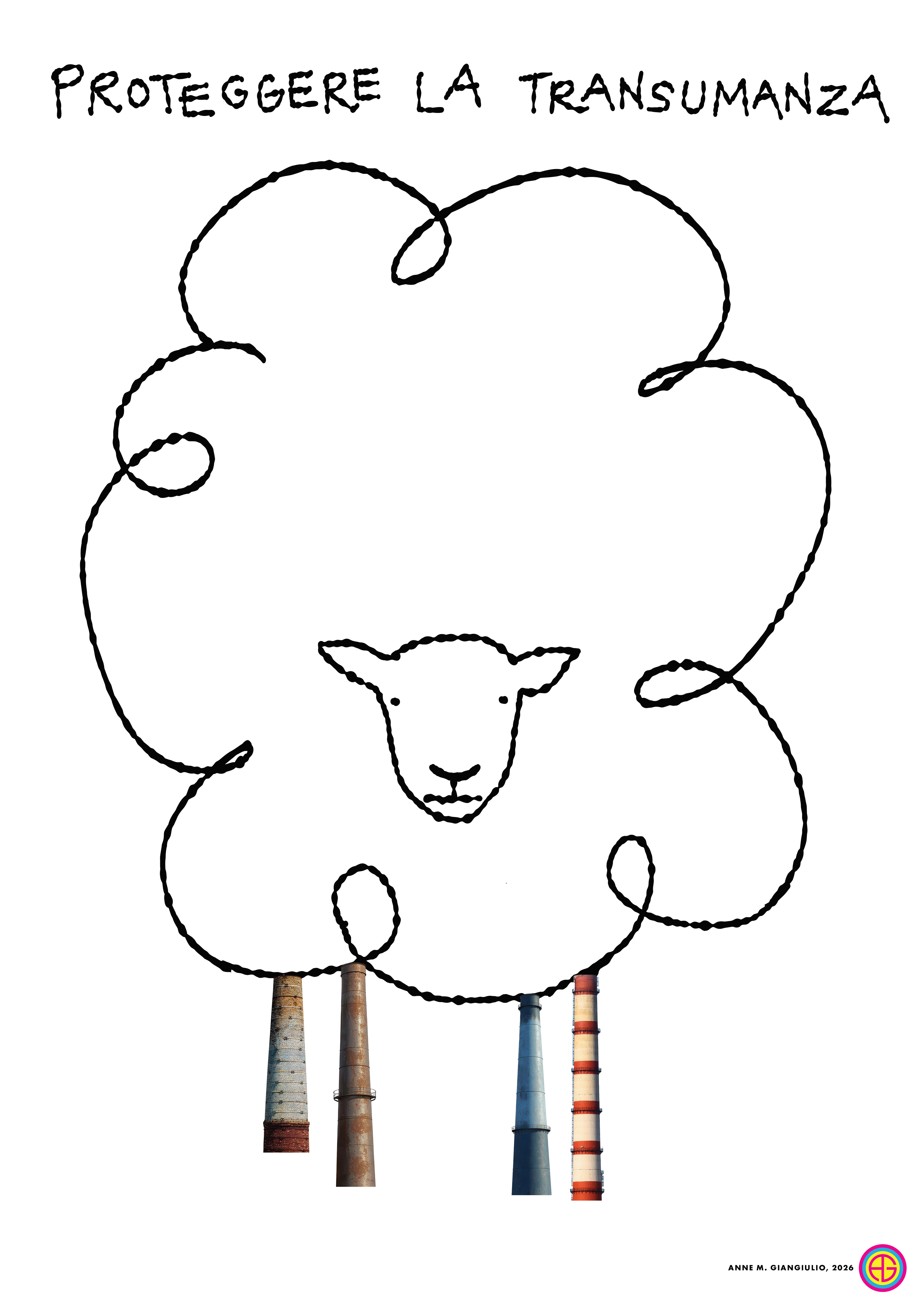
Transhumance is the seasonal movement of livestock between fixed high and low altitude pastures. It relies on traditional migration routes, helps preserve local biodiversity, and is recognized globally as an important cultural heritage practice. In summer, herders guide animals up to cool mountain areas to find fresh green grass when lowland fields turn dry and hot. In winter, flocks return down to sheltered valley farms before snow covers the high peaks. Along the way, grazing animals naturally manage forest edges, clear brush, and keep mountain meadows healthy. Local villages host big festivals with music and food when the herds start and finish their long journeys.
Thus, beyond its positive environmental impact, transhumance also contributes to social inclusion, strengthening cultural identity and ties among families, communities and territories while counteracting the effects of rural depopulation.
Pressures from climate change, urban growth, modern farming, and blocked migration paths threaten this cultural tradition.
In Italy, transhumance takes place in Abruzzi, the region where both my mother's and father's families are from (and where my father was born). This is the historical heartland of long-distance animal driving. Shepherds traditionally move herds from the high Abruzzo mountains down the vast royal tracks (Tratturo Magno) to the plains of Puglia.
In 2019, this practice was recognized in Italy (and in 2023 in Albania, Andorra, Croatia, France, Luxembourg, Romania and Spain) as an Intangible Cultural Heritage of Humanity by UNESCO.
This poster 'Proteggere La Transumanza' ('Protect the Transhumance', in Italian) was selected by the international, juried 19th Bienal Internacional del Cartel en México (19th Biennial of the Poster in Mexico).
This poster 'Proteggere La Transumanza' ('Protect the Transhumance', in Italian) was selected by the international, juried 19th Bienal Internacional del Cartel en México (19th Biennial of the Poster in Mexico).